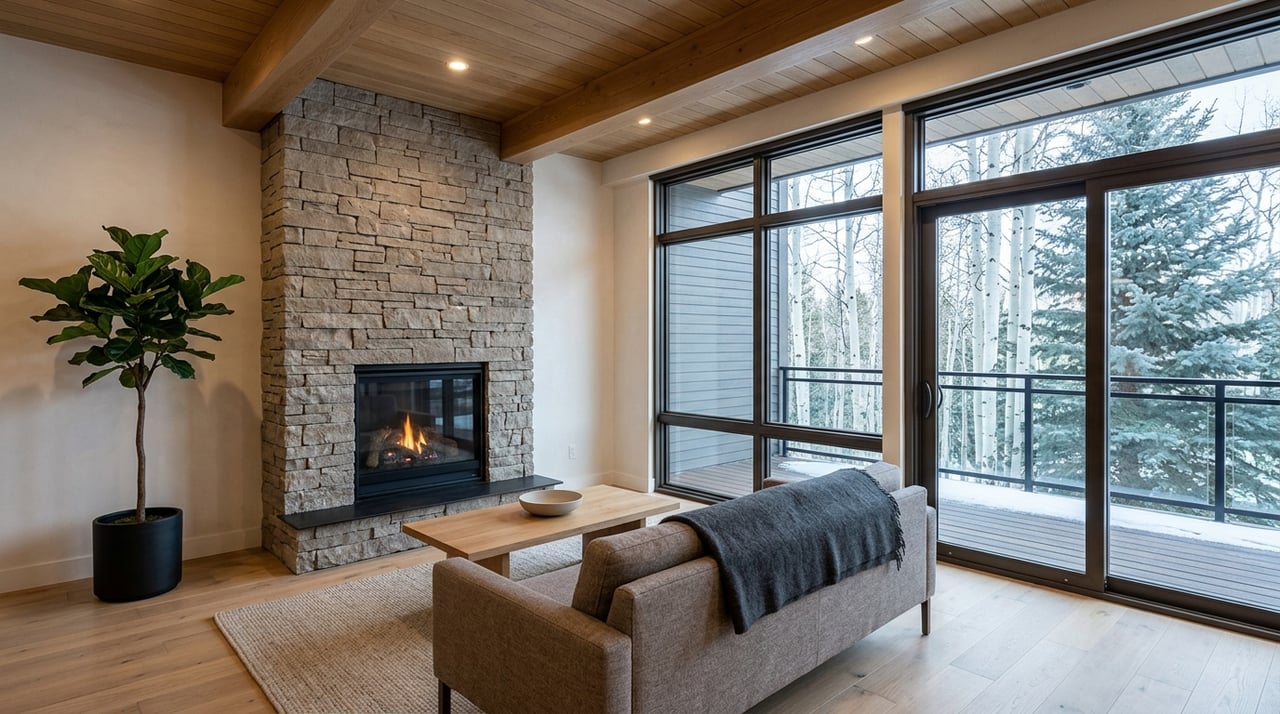
Aspen Condos Vs Homes: How To Choose Your Base
June 11, 2026
June 11, 2026
If you picture Aspen ownership one way, you may miss the option that actually fits how you live. In this market, the condo versus home decision is not only about size or style. It is often about how close you want to be to downtown, how much privacy you want, and how you plan to use the property throughout the year. This guide will help you weigh those trade-offs with Aspen’s local rules and day-to-day realities in mind. Let’s dive in.
Aspen is unusually location-driven. The downtown core brings together retail, restaurants, transit services, and the Aspen Pedestrian Mall, while the Silver Queen Gondola rises directly from downtown Aspen to 11,200 feet. That setup can make proximity just as important as square footage.
For many buyers, a condo or townhome near downtown means easier ski mornings, simpler dinners in town, and a more walkable routine. A detached home often offers more privacy and land, but it may also mean giving up some of that car-light convenience. In Aspen, your ideal base depends on how you want your days to feel.
Condos often appeal to buyers who want a lock-and-leave ownership style. In Aspen, that can mean easier seasonal use, fewer day-to-day responsibilities, and closer access to downtown and the lifts. If you travel often or split time between homes, that simplicity can be a major advantage.
Some Aspen condo properties also blur the line between residential ownership and hospitality. The city’s Lodging-Exempt permit category applies to lodge and condo-hotel properties that meet specific standards, including unified branding, on-site management and reception, and at least three qualifying amenities.
That matters because the condo experience can vary widely from one building to another. Some properties offer a service-heavy environment with features that feel closer to a luxury lodging experience than a standard residential building.
Aspen’s lodge-style checklist shows how broad that amenity mix can be. Depending on the property, buyers may see fitness facilities, pool or hot tub areas, lounge space, food service, concierge-style services, retail-style services, or meeting spaces.
A local example is Concept 600, located four blocks from the Silver Queen Gondola and within walking distance of downtown shops and dining. Aspen Snowmass describes amenities there as including underground garage parking, concierge services, housekeeping, airport transportation, health club passes, and 24/7 maintenance support. For buyers seeking ease and service, this kind of setup can be compelling.
Townhomes often sit between condos and detached homes. You may get more separation and a more house-like feel than a condo, while still avoiding some of the solo maintenance responsibilities that come with a single-family home.
That middle ground can work well if you want more space but still value shared governance and a simpler ownership structure. In Aspen, though, townhomes often come with homeowners association rules, and those rules can affect how you use the property.
If a townhome or condo is part of an HOA, the governing documents may control whether short-term rentals are allowed at all. Aspen requires HOA compliance documentation for certain short-term rental applications, but the city does not interpret or enforce private covenants, HOA rules, or bylaws.
In practical terms, a property can be city-eligible for short-term rental and still not work for your plans if the HOA says no. That is why building documents should be part of your decision from the start, not an afterthought during contract review.
Single-family homes are usually the strongest fit if you value privacy, outdoor space, and control. They often give you a quieter arrival experience, more separation from neighbors, and greater freedom in how the property lives day to day.
For many buyers, that autonomy is the whole point. If you are thinking long term, want more land, or prefer a property that feels more personal and self-contained, a detached home can be the better match.
In Aspen, some standalone homes come with an extra layer of review. Properties inside a historic district or individually designated properties are subject to design standards, and even some interior work may require review before work begins.
That does not make historic homes less desirable. In many cases, it is simply a trade-off between character and flexibility. A historic home may offer a distinctive ownership experience, but it can also involve more oversight when you renovate or make changes.
The simplest way to frame the decision is this: condos and condo-hotels often prioritize simplicity, while homes often prioritize autonomy. Neither is better across the board. The right choice depends on your routine, your expectations, and how hands-on you want to be.
If you want shared amenities, fewer daily responsibilities, and easy access to downtown or the gondola, a condo or townhome may feel natural. If you want privacy, quieter surroundings, and more control over the property, a detached home may align better.
Parking is one of the most practical examples of this trade-off. Downtown core parking is enforced from 10:00 a.m. to 6:00 p.m. with a 4-hour limit in peak season. Residential parking is managed separately, costs $9 per day, and vehicles must be moved every 72 hours.
If you expect frequent trips into town for dining, errands, or ski days, those logistics matter. A walkable condo or townhome near downtown can make everyday use feel easier, while a detached home may require more planning around parking and access.
Aspen’s downtown core is set up more like a pedestrian district than a car-first area. The city describes it as the hub of Aspen, with a concentration of destinations, retail, restaurants, and transit services. That is one reason many buyers place such high value on being near Main Street and the gondola.
If rental flexibility is part of your strategy, Aspen’s short-term rental rules deserve close attention. The city defines a short-term rental as occupancy for less than 30 days, and owners must obtain the required permit and licensing before operating. Rentals of 30 days or more are treated as long-term rentals and do not require a short-term rental permit.
Aspen’s current permit structure also varies by use. The Owner-Occupied permit is limited to 120 rental nights per year and is only available to owners using the property as a primary residence. The Classic permit has no annual night limit, but it may be capped by zone district and subject to a waitlist.
The Lodging-Exempt permit is designed for lodge and condo-hotel operations that meet the city’s definition. The property must operate under one unified brand, provide on-site in-person management and reception during normal business hours, and include qualifying amenities from the city’s list.
That category is not available to individual owners just because they own in a condo-hotel-style property. The city’s rules make clear that individual unit owners in those properties must use another permit type if they want to rent short-term.
Before you choose a condo, townhome, or home in Aspen, confirm a few basics:
In Aspen, these details can matter as much as finishes, views, or bedroom count. A beautiful property is only the right property if it supports how you plan to use it.
Aspen’s built environment is more varied than many buyers expect. The city describes the Main Street Historic District as Victorian in character, while also noting that modernist architecture appears there as well. That mix gives buyers a wider range of ownership experiences than a simple condo-versus-home label might suggest.
A newer condo may feel more turnkey and predictable. A historic home may feel more distinctive and personal, but it may also come with design standards that shape future changes. In Aspen, the physical property and the regulatory framework often need to be evaluated together.
If your priority is seasonal ease, shared services, and quick access to downtown and skiing, a condo or condo-hotel-style property will often be the stronger fit. If your priority is privacy, land, and long-term personalization, a single-family home will often make more sense. If you want something between those two, a townhome may offer the right balance.
The key is to look beyond the floor plan. In Aspen, the better question is how the property functions within the city’s parking patterns, HOA rules, historic-preservation framework, and short-term rental structure.
That is where a local, detail-driven approach matters. If you want help comparing Aspen condos, townhomes, and homes based on how you actually plan to live, invest, or travel, connect with Tara Slidell for discreet, concierge-level guidance.
Stay up to date on the latest real estate trends.
When Tara is not taking care of her clients and putting together deals, she is enjoying Aspen’s great outdoors with her husband and their two daughters, and their dog, Mack.