Buying Basalt CO Riverfront Homes: What to Consider
April 16, 2026
April 16, 2026
If you are drawn to riverfront living in Basalt, you are probably looking for more than a pretty view. You want a home that feels calm and private, while still keeping you connected to the rhythm of town and the landscape that makes this part of the Roaring Fork Valley so distinctive. The right property can deliver that balance, but riverfront ownership comes with a few important details worth weighing before you buy. Let’s dive in.
Basalt is defined by the meeting of the Fryingpan and Roaring Fork rivers, and that setting is a major part of the town’s appeal. In a town planning document, Basalt describes the Fryingpan as a Gold Medal trout fishery that runs 14 miles from Ruedi Dam to its confluence in town, while Colorado Parks and Wildlife notes that the Roaring Fork offers public access for shore, wade, and float anglers through much of the year.
That combination gives riverfront living here a different feel than a home near a simple creek or drainage. In Basalt, the river corridor is both scenic and active, which means your experience of the water may include quiet mornings, seasonal movement, and nearby public use depending on the location.
The natural setting also adds to the visual appeal. According to the town’s Forestry and Gardens department, the Roaring Fork corridor along Two Rivers Road is lined with narrowleaf cottonwoods, and Basalt maintains roughly 3,000 trees in parks, open space, and rights-of-way. For buyers, that helps explain why some river-adjacent properties feel sheltered and established, even when they sit close to town amenities.
One of Basalt’s advantages is how closely river living ties into daily convenience. The town identifies its main inhabited areas as Historic Downtown and Southside in East Basalt, plus Willits in West Basalt, so your relationship to the river may also shape your relationship to shops, dining, parks, and civic spaces.
That connection is becoming even stronger. Basalt’s current streetscape planning is designed to link the renovated Basalt River Park to historic downtown with wider sidewalks, improved ADA access, additional bike parking, and clearer pedestrian flow between downtown and the Roaring Fork River, as outlined in the town’s Midland Avenue Streetscape project materials.
In practical terms, that means a riverfront address in Basalt is not always defined by seclusion alone. Some homes may offer a blend of residential quiet and easy access to community activity, especially near public gathering spaces and walkable routes.
For day-to-day mobility, Basalt Connect also provides free on-demand rides every day from 7 a.m. to 10 a.m. and from 3 p.m. to 10 p.m. between downtown Basalt, Willits, and nearby neighborhoods within the service area. If convenience matters to you, that can be a meaningful part of the lifestyle picture.
Not all riverfront homes live the same way. In Basalt, the most important questions often come down to how a property handles orientation, privacy, and outdoor use.
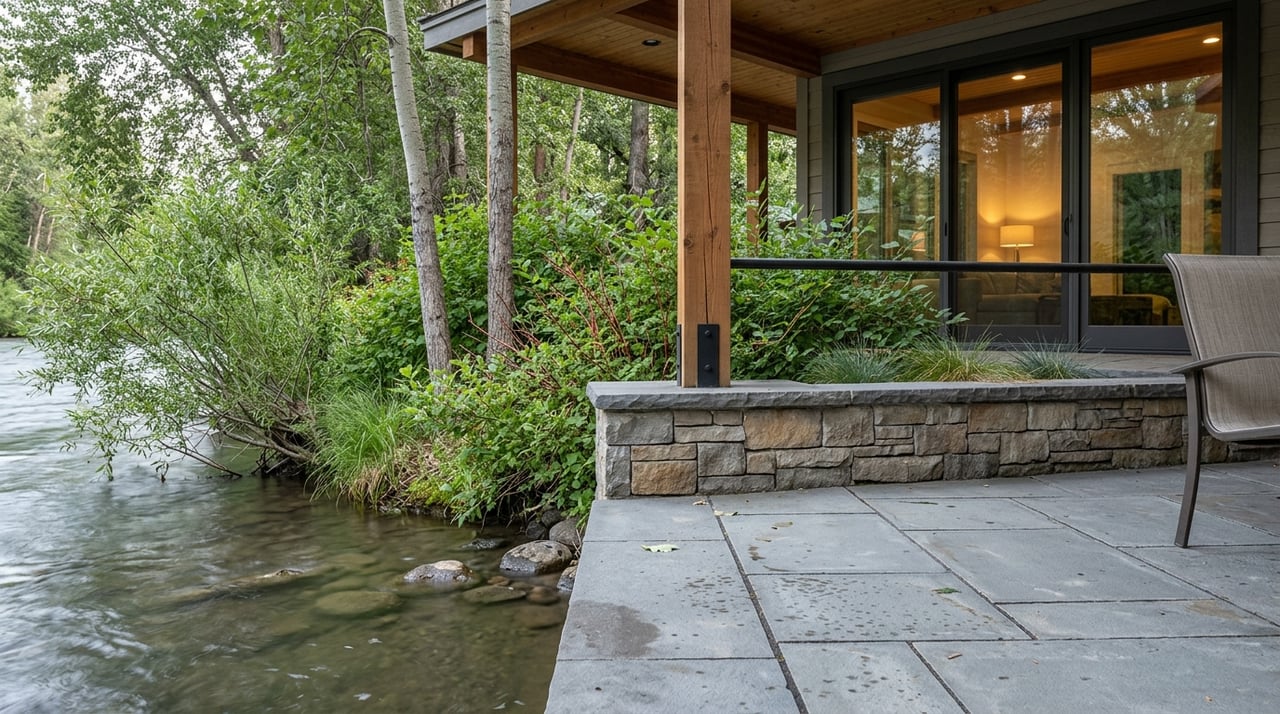
A riverfront lot can offer very different experiences depending on window placement, deck orientation, and how the outdoor areas are arranged. Some homes frame the water as a quiet backdrop, while others make it the focal point of the main living spaces.
When you tour, pay attention to where you would actually spend time. A dramatic view matters, but so do usable terraces, shade, sun exposure, and whether the home feels open to the river without feeling overly exposed.
Basalt’s planning efforts emphasize river access, pedestrian connectivity, and public-use spaces along the water, according to the town’s streetscape planning materials. That makes privacy a key part of your decision.
Colorado Parks and Wildlife also notes that the Roaring Fork includes public access points for anglers, and the town has discussed safer and more accessible river access improvements. As a result, some riverfront settings may feel more lively and visited than buyers expect, particularly near established access areas or community amenities.
Outdoor space tends to carry extra value in a riverfront home, but the best setup depends on your goals. If you want a quiet retreat, you may prioritize a yard or terrace buffered by trees. If you enjoy being connected to the energy of town, a property near parks, paths, or river-facing public areas may feel more engaging.
This is one of the most personal parts of the search. The same river-adjacent location can feel vibrant to one buyer and too active to another.
A smart showing strategy for Basalt riverfront homes is to visit more than once. If possible, see the property at different times of day and compare a busy weekend with a quieter weekday.
That extra step can help you understand the rhythm of the setting. You can better assess light, sound, parking, pedestrian activity, and whether the home feels like a private retreat or a location closely tied to a public amenity. In a market where the river is part of both the scenery and the community experience, that context matters.
Riverfront homes often require closer review than properties farther from the water. In Basalt, town planning around river stewardship explicitly calls for floodplain analysis when development or redevelopment involves riverfront property, while also emphasizing preservation of the 100-year floodplain, protection of riverbanks and riparian and wetland areas, and attention to riverine erosion, as outlined in the town’s river planning materials.
For you as a buyer, that means floodplain status is not a side issue. It should be part of your early diligence, along with drainage, bank condition, insurance questions, and any site-specific concerns tied to the parcel.
The same planning materials also envision a riverfront open-space and park system along both rivers. That means some properties may sit beside active public land, planned access points, or future improvements rather than a completely private river edge.
This is not necessarily a negative. In some cases, adjacency to open space can enhance views and preserve a sense of openness. Still, it is important to confirm where private ownership ends, what easements may exist, and whether there are any access or maintenance responsibilities tied to the property.
Basalt spans parts of Eagle and Pitkin counties, so buyers should confirm exactly which county a property falls within and which local rules and services apply. The town notes this split in its community information, and it can affect how you approach diligence and planning.
Before closing, a local professional should help verify floodplain status, title matters, easements, insurance considerations, and any obligations related to access or upkeep. For a riverfront purchase, these details are part of protecting both lifestyle and long-term value.
The best riverfront home in Basalt is not simply the one closest to the water. It is the one that aligns with how you want to live, whether that means a peaceful setting with a sheltered feel, easy access to downtown, or a location connected to parks and the broader river corridor.
If you are buying from outside the area, this is where local guidance becomes especially helpful. A well-managed search should go beyond online photos and focus on how a property actually lives across seasons, times of day, and varying levels of activity.
At Tara Slidell, you can expect a discreet, concierge-led approach to evaluating Basalt and the broader Roaring Fork Valley, with thoughtful support for in-person or remote buyers who want clarity before making a decision.
Stay up to date on the latest real estate trends.
When Tara is not taking care of her clients and putting together deals, she is enjoying Aspen’s great outdoors with her husband and their two daughters, and their dog, Mack.