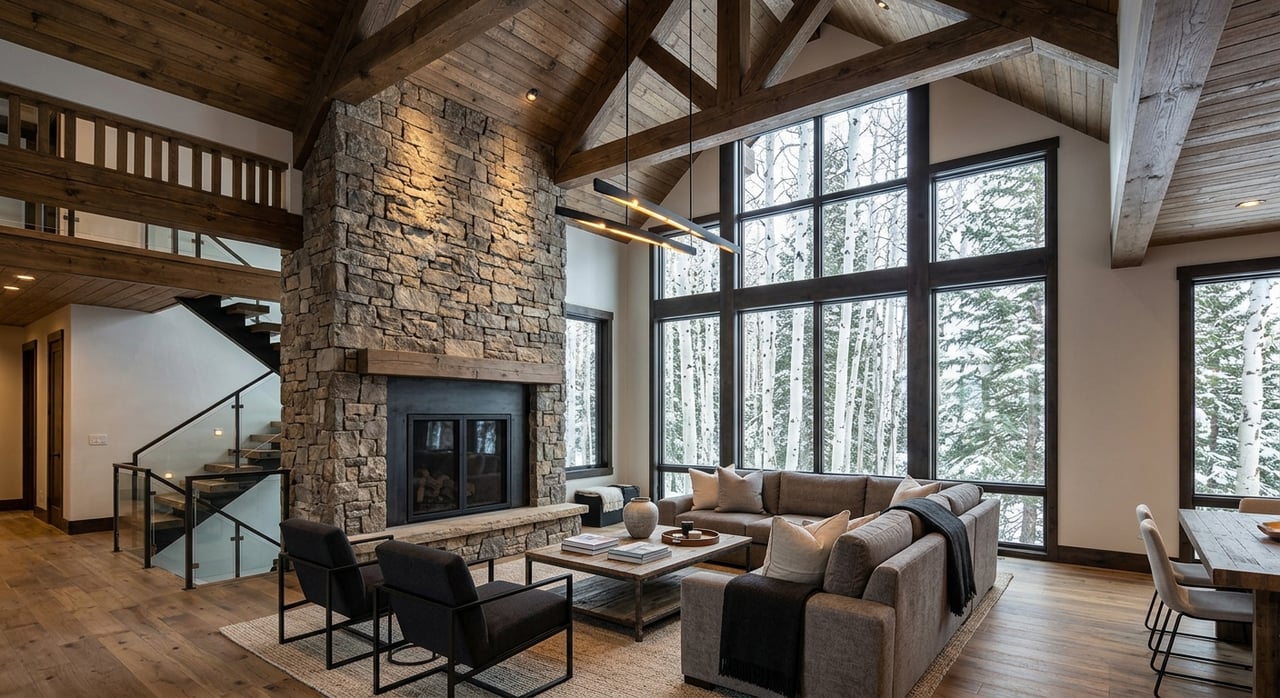
Building a Home in Carbondale: What Luxury Buyers Need
April 2, 2026
April 2, 2026
If you are planning to build a luxury home in Carbondale, the lot itself is only the beginning. In this part of the Roaring Fork Valley, jurisdiction, design standards, infrastructure, and wildfire planning can shape your timeline just as much as your architect’s vision. The good news is that with the right early planning, you can avoid costly surprises and move forward with far more confidence. Let’s dive in.
One of the first and most important questions is whether your parcel sits inside the Town of Carbondale or in unincorporated Garfield County. That distinction affects the code that applies to your property, the review path, and the permits you may need later. According to the Town of Carbondale Unified Development Code, town rules apply within Carbondale’s corporate boundaries, while Garfield County rules apply only to unincorporated land.
This matters because the process is not always the same from one parcel to the next. A luxury buyer looking at land in the 81623 area may find that two nearby properties have very different approval steps depending on where the boundary falls.
If your project is a single-family detached home without an accessory dwelling unit, it is exempt from site plan review in Carbondale. That can simplify the path for some buyers.
If your project does require site plan review or a special use permit, the Town requires a pre-application meeting, followed by application completeness review, staff review, public hearing or hearings, and a final decision under the UDC process.
For parcels in unincorporated Garfield County, development may require a land use change permit unless the use is exempt as a by-right use. The County’s Land Use and Development Code outlines that framework.
If the property involves a land division, final plat or exemption plat approval can function as the land use permit. For buyers considering larger rural parcels, this step can become central to the overall build strategy.
Many luxury buyers think first about architecture and finishes. In Carbondale, it is just as important to think about the permit structure behind the home.
The Town’s building permit application shows that separate building, electrical, plumbing, and mechanical permits are required. The same application also notes that use tax and other fees may apply, and that a permit expires if work does not begin within 180 days or if the work is abandoned for 180 days.
That means your consultant team and construction schedule should be coordinated from the start. Delays in design, contracting, or site readiness can have ripple effects if permit timing is not managed carefully.
Luxury construction in Carbondale is not a typical suburban build. Local climate and site conditions place real demands on structure, energy performance, and the way the home sits on the land.
According to the Town’s climate and geographic design criteria, builders must account for a 50-pound ground snow load, 40-pound roof snow load, 90 mph wind speed, 36-inch frost depth, and a winter design temperature of -5 degrees. The Town also identifies climate zone 6B and includes an ice-barrier underlayment requirement, along with energy targets such as R-49 ceilings and higher wall insulation levels.
For you as a buyer, these standards influence not just engineering, but comfort and long-term performance. They can affect roof design, envelope details, material choices, and the overall construction budget.
The Town’s development standards state that buildings should respond to unusual topography, view corridors, trees, and other natural features. They also note that north-facing facades are especially vulnerable to winter snow and ice accumulation, and that snow-shed and snowpiling zones should be considered when arranging the site.
In practice, this means the best luxury design is often one that works with the parcel rather than forcing a preconceived plan onto it. A well-sited home can improve winter function, preserve important view relationships, and reduce headaches later.
Carbondale’s planning approach is distinct. The Unified Development Code and the Comprehensive Plan both emphasize walkability, community character, and a scale that fits the town’s setting.
For luxury buyers, that does not mean sacrificing quality. It means a high-end custom home should also respect site massing, neighborhood context, and design details that feel appropriate to Carbondale. In some areas, especially Old Town Residential, the code specifically calls for preserving scenic, historic, natural, and design features, while prioritizing single-family homes.
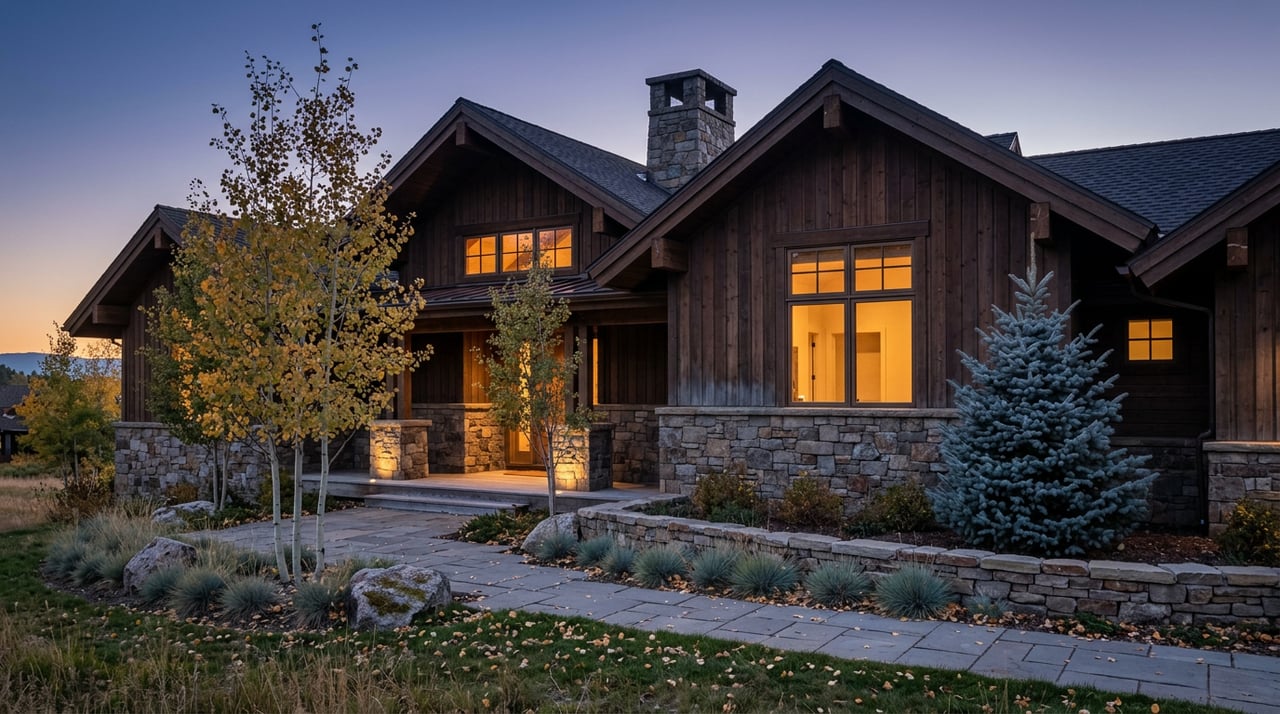
The Town’s residential design standards call for street-facing facades to be articulated with features such as porches, dormers, offset gables, clearly defined entryways, and varied rooflines. For interior comfort, the Town also encourages passive solar heating, clerestories, skylights, and vaulted ceilings.
These standards can align well with refined mountain architecture when they are integrated early. They also reinforce an important point: in Carbondale, luxury is often expressed through thoughtful design and performance, not simply through size.
A custom home is more than a design project. It is also a complex coordination exercise involving utilities, inspections, access, and sometimes off-site approvals.
The Town’s inspection guidance shows that construction may involve separate inspections for water and sewer connections, footing, foundation, damp-proofing, underground plumbing, radon, fire sprinkler or alarm, energy rough-in, and final inspection. That is a long list, and it underscores why early scheduling matters.
If your parcel is outside town, infrastructure can become a major early-phase issue. Garfield County’s single-family and duplex checklist requires proof of legal and adequate access, and it notes that a county road and bridge permit or a CDOT permit may be required in some cases.
The same checklist states that a separate grading permit may be needed before pre-permit excavation in some situations. It also makes clear that HOA approval, if required, is the owner’s responsibility.
For some county parcels, on-site wastewater treatment is a key part of the pre-construction process. Garfield County’s OWTS regulations require a permit before installation, supported by a site-and-soil evaluation and a completed system design.
If the lot needs a private well, the Colorado Division of Water Resources states that new or replacement wells require a permit, and review of complete applications may take up to 49 days. For luxury buyers, that is an important reminder to address water planning early, before your architectural package is fully developed.
Wildfire readiness is part of responsible mountain construction. It should be part of the conversation early in the design and site-planning phase, not an afterthought near the end.
The Carbondale & Rural Fire Protection District offers free wildfire risk assessments and recommends defensible space along with fire-resistant materials such as Class-A shingles or metal roofing. This guidance aligns with Colorado State Forest Service principles around the home ignition zone and fuel reduction.
For a luxury home, wildfire planning can often be integrated in a way that protects both aesthetics and performance. Site layout, roofing choices, exterior materials, and vegetation planning all play a role.
One of the most common mistakes buyers make is assuming the construction clock starts with the design drawings. In Carbondale, the timeline often begins much earlier, with due diligence on jurisdiction, access, utilities, land use approvals, and site-specific reports.
A practical sequence, based on the Town and County review structure, looks like this:
Because some projects involve public hearings, soils work, utility coordination, or separate well and wastewater approvals, it is wise to allow extra time. A realistic schedule can protect your budget, your design intent, and your overall experience.
Carbondale offers a compelling opportunity for buyers who want a custom mountain home with strong design integrity and a genuine sense of place. But it is also a market where the details matter.
The right parcel is not just about views or acreage. It is about jurisdiction, access, infrastructure, design fit, and how efficiently the project can move from concept to completion.
That is where informed guidance becomes valuable. If you are considering land or a future custom build in Carbondale or elsewhere in the Roaring Fork Valley, Tara Slidell can help you evaluate opportunities with a clear, discreet, concierge-level approach.
Stay up to date on the latest real estate trends.
When Tara is not taking care of her clients and putting together deals, she is enjoying Aspen’s great outdoors with her husband and their two daughters, and their dog, Mack.